
Kaiwen Wang's e-Portfolio
ID Definition
Instructional design is the process of creating educational materials based on learning theories to meet students' needs (Piskurich, 2015). It involves analyzing goals and designing systems that deliver effective instruction. The ADDIE model (analysis, design, development, implementation, evaluation) is often used to create content, especially in areas like information literacy (Mullins, 2014). From my perspective, I see this approach as essential in designing lessons to diverse student needs (or meet universal design learning) and enhancing learning outcomes.
ADDIE Model
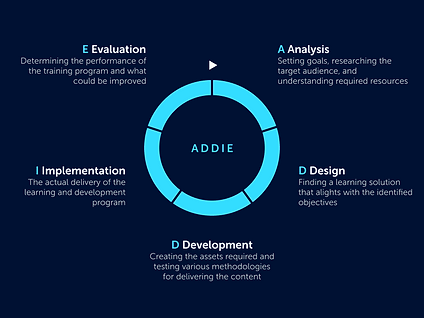
The ADDIE Model is a system for designing and improving instruction. It stands for Analysis, Design, Development, Implementation, and Evaluation. The model is important because it offers a simple, clear framework that helps instructional designers create effective learning experiences. It makes sure each step of the teaching process is planned carefully. The phases are:
-
Analysis Phase:
Understand learners' interests and prior knowledge by reviewing literature, identifying content, and setting clear goals (Piskurich, 2015).
-
Design Phase:
Define objectives, decide on delivery methods (e.g., face-to-face or e-learning), and create outlines, flowcharts, and storyboards to organize content and instructional flow (Mullins, 2014).
-
Development Phase:
Create course content and activities while setting up an assessment plan for both learners and the course (Piskurich, 2015).
-
Implementation Phase:
Deliver materials via testing to ensure effectiveness before full implementation (Mullins, 2014).
-
Evaluation Phase:
Assess the design through formative and summative evaluations. Formative evaluations refine the course during delivery using reviews and small group tests, while summative evaluations at the end measure effectiveness and guide adoption decisions (Piskurich, 2015; Mullins, 2014).
In my view, each phase builds upon the last, creating a continuous improvement loop. The process ensures learning materials are not only tailored to learners’ needs but also adaptable, improving both teaching strategies and learner outcomes.
Reference:
Image: Valamis. (n.d.). The ADDIE model [Image]. Retrieved November 20, 2024, from https://www.valamis.com/hub/sam-model
Mullins, K. (2014). Good IDEA: Instructional design model for integrating information literacy. Long Island University Post.
Piskurich, G. M. (2015). Rapid instructional design: Learning ID fast and right (3rd ed.). Wiley.
SAM Model
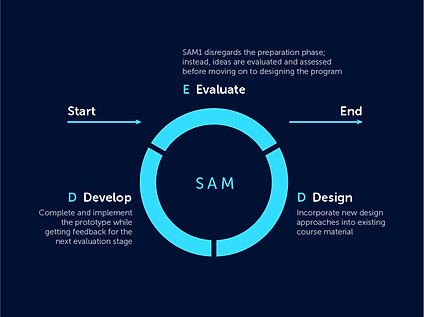
The SAM (Successive Approximation Model) is an agile, flexible instructional design approach that focuses on iterative cycles of design, prototyping, and review, ensuring timely adjustments to meet performance needs (Allen, 2016). Its phases are:
-
Preparation:
A quick information-gathering phase replaces lengthy content evaluations, ensuring a swift start.
-
Iterative Design:
A collaborative brainstorming session sets project goals and fosters team planning. This phase involves cycles of design, prototyping, and review.
-
Iterative Development:
The team moves through design stages while continuously evaluating the product to meet performance needs, ensuring flexibility, collaboration, and timely adjustments.
In my view, SAM model is a flexible and fast approach to instructional design. It emphasizes creating and testing ideas repeatedly, making quick adjustments as needed. It starts with gathering information, followed by team brainstorming to set goals. The process then moves through design stages, always refining the product to ensure it meets the desired goals.
Reference
Image: Valamis. (n.d.). The SAM model [Image]. Retrieved November 20, 2024, from https://www.valamis.com/hub/sam-model
Allen, M. W. (2016). Michael Allen's guide to e-learning: Building interactive, fun, and effective learning programs for any company (2nd ed.). Wiley.
Dick Carey Model
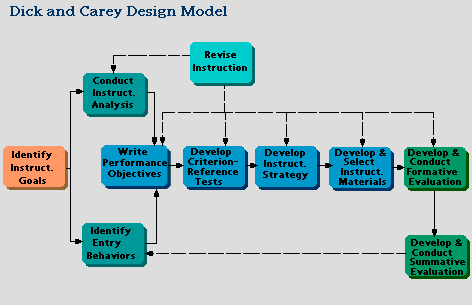
The Dick and Carey Model is a system for designing effective instruction. It was created by Walter Dick and Lou Carey. The model is important because it gives a clear, step-by-step way to design lessons or courses. It helps teachers and instructional designers make sure that students learn what they are supposed to. The phases are:
-
Identify Instructional Goals
Decide what you want learners to be able to do after the instruction.
-
Conduct Instructional Analysis
Break down the goal into smaller steps and skills learners must learn.
-
Analyze Learners and Contexts
Study who the learners are and where they will learn and apply the skills.
-
Write Performance Objectives
Write clear statements about what learners should know or be able to do.
-
Develop Assessment Instruments
Create tests, quizzes, or other tools to check if learners have reached the objectives.
-
Develop Instructional Strategy
Plan the learning activities, methods, and materials that will help students meet the goals.
-
Develop and Select Instructional Materials
Create or choose the learning materials, like videos, readings, and activities.
-
Design and Conduct Formative Evaluation
Test the instruction with a small group of learners to find and fix problems.
-
Revise Instruction
Make improvements to the course based on the feedback from the formative evaluation.
-
Design and Conduct Summative Evaluation
After final revisions, evaluate the instruction’s overall effectiveness with real learners.
In my view, the Dick and Carey Model is a clear and systematic approach to instructional design. It focuses on breaking down the learning process into smaller, connected steps. Each phase builds on the previous one, starting from identifying goals to evaluating the final product. The model helps designers carefully plan, develop, test, and improve instruction to make sure it meets learners’ needs and achieves the intended outcomes.
Reference
Dick, W., Carey L& Carey J.O (2015) The Systematic Design of instruction (8th ed.). Boston, MA: Pearson
My Project (ETEC 5440)
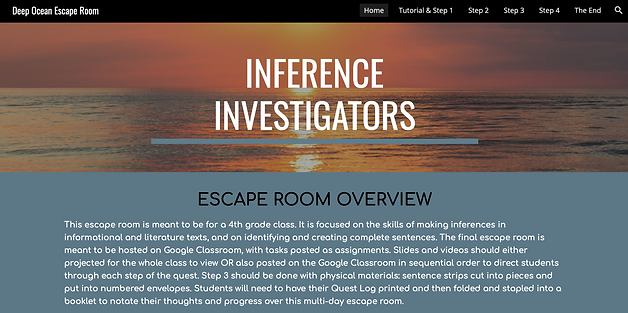
Our group members collaboratively design and implement a gamified reading comprehension activity "Deep Ocean Escape Room" for 4th graders, focusing on making inferences and constructing complete sentences. Ensure roles are clear, timelines followed, and inclusivity prioritized. Create materials, evaluate their effectiveness, and integrate feedback to refine the project for successful implementation and engagement.
My Project (ETEC 6440)
This project is designed to help international students successfully complete their Optional Practical Training (OPT) applications. It provides clear, step-by-step guidance on eligibility, document preparation, and form completion. The instructional design aims to reduce confusion, build confidence, and support students in achieving their career goals in the United States.

My Reflection
Instructional Design shows how important it is to use structured and step-by-step instructional design models, such as ADDIE and SAM, to create effective learning experiences. As a K-12 teacher, I will use these models to adjust my lessons to fit the needs of my students. I will also make sure to get continuous feedback. This will help me create teaching materials that are flexible and interesting, so they can meet the needs of all students and improve both teaching and learning results.